Bulletin · CA Daily Wire
I’m old enough to remember the day when CVS, the big drugstore company, opted to get even bigger by acquiring the health insurer Aetna . “Today marks the start of a new day in healthcare and a transformative moment for our company and our industry,” CVS Health President and Chief Executive Officer Larry J. Merlo boasted.
The $70-billion deal would lead to “improved health outcomes and lower medical costs,” he said. I’m not giving away my age with this recollection. The deal happened a mere eight years ago, in 2018.
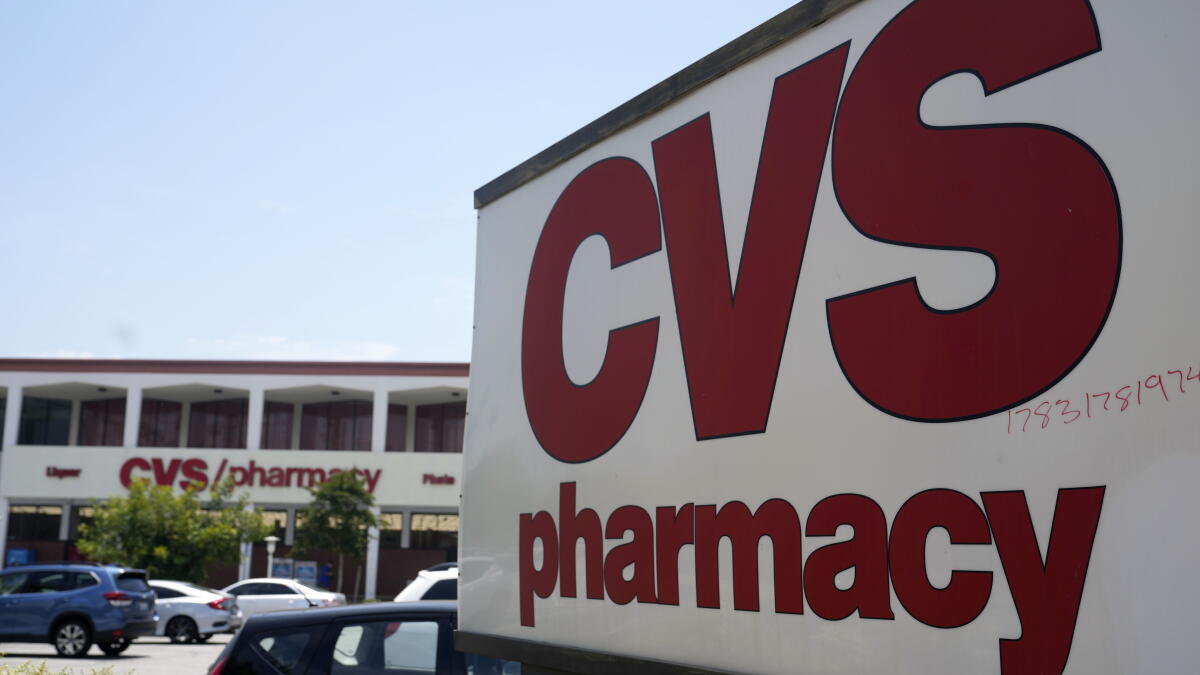
Merlo’s ambitions and braggadocio didn’t have much of a shelf life: On Wednesday, the company announced it was deconstructing the edifice he had erected, by splitting into two companies . Greater independence will make it easier to serve consumers, members, patients, and communities. — CVS Health CEO David Joyner, explaining the virtues of spinning off the company’s drugstores One, encompassing Aetna and Caremark, the pharmacy benefit manager it acquired in 2007 for $26.5 billion, will retain the name CVS Health, and the other, dubbed CVS Pharmacy, will own the 9,000 CVS drugstores, the nationwide legacy of the original company that started with a single Massachusetts store. The company’s current CEO, David Joyner, announced the breakup with the same cocksure swagger his predecessor had employed in promoting his big idea.
The goal would be to create “two distinct leaders in healthcare” where before there was only one. The result would deliver “more affordability, greater access, and a simpler experience,” Joyner said. Has the collapse of a corporate strategy ever been announced with such enthusiasm?
Well, yes — it has become common in announcements of major corporate transactions. The executives who will reap the profits of these deals always promise they’ll produce lower prices, greater choice and overall a consumer nirvana, which never seem to materialize. But leave that aside.
Beyond the boilerplate, Joyner struggled to rationalize the breakup. Speaking with investment analysts on the company’s third-quarter earnings conference call Wednesday — at which the breakup was announced — he kept using the term “focus,” as in “we are creating simpler, stronger and more focused companies.” And: “Each of the two companies will remain a leader ... powered by the right assets, the right focus,” etc., etc. Investors don’t seem to have been entirely convinced: CVS Health shares fell 12.5% the day after the announcement.
Only once during the call, by my reckoning, did Joyner allude to the real reason for the split. Each of the new companies, he said, will be better positioned to “more effectively adapt to the regulatory and other external dynamics.” By this he meant that companies like CVS are facing increasing government skepticism about the wisdom of combining drug retailing, pharmacy management and health insurance under one roof. In other words, CVS is breaking itself up before government regulators do the job for it.
The plan was crafted at least months ago, but the advent of a Democratic Congress means regulatory pressure is likely to intensify in coming years. Before examining more specifics about CVS, it’s proper to look at the condition of the drug retail sector generally. It’s in a bad way.
Rite-Aid, which once had ranked among the big three of national pharmacy chains, went bankrupt in May 2025, filing for Chapter 11 protection only eight months after emerging from a previous bankruptcy filing. Walgreens was taken private that August by the private equity firm Sycamore Partners, which acquired it the previous month. The deal, its newly minted CEO said at the time, would allow the chain to renew “our focus on our core pharmacy and retail platform, our stores and our customer experience.” (There’s that word again.) Rite-Aid, Walgreens and CVS all had harbored the ambition of becoming dominant players in the American healthcare system.
Their extensive store networks would become hubs of healthcare delivery systems that, to varying degrees, brought together insurers, pharmacy benefit management and local and regional physician groups. So CVS and health insurer Aetna merged. Walgreens made a $5.2-billion investment in primary care provider VillageMD and took a $330-million stake in home care provider CareCentrix, giving it control of both firms.
Rite Aid wasn’t as aggressive but still built up its national footprint to as many as 5,000 stores. As I wrote in 2023, the companies nattered on about evolving into one-stop medical providers so that “patients discharged from the hospital ... will be able to stop at a health hub location to access services such as medication evaluations, home monitoring and use of durable medical equipment, as needed” (according to the merger announcement by CVS and Aetna). By then, however, the thrill had begun to waste away, like the tuberculosis patients in Thomas Mann’s novel “The Magic Mountain.” The companies discovered that in healthcare, one-stop-shopping was more expensive to execute and yielded lower profits than they expected.
Or, to place it in corporate-speak, “It has taken us longer than anticipated to realize the cost synergies across the combined assets,” as John P. Driscoll, then the head of Walgreens’ U.S. division, told investment analysts in late 2023. Walgreens proceeded to shutter 60 VillageMD clinics as part of its strategy to focus on “our highest opportunity markets,” Driscoll said, meaning affluent urban and suburban areas.
The drug chains had been unprepared to navigate the complexities in American healthcare — political controversies, Medicare regulations, issues of prescription drug pricing — that they had not faced in their core business of peddling prescriptions and over-the-counter nostrums, leading to a string of unpleasant surprises. Walgreens got entangled in abortion politics when it announced that it wouldn’t distribute or ship the drug mifepristone in 21 red states, including at least four where abortions were legal. It was capitulating to a threat from a group of red state attorneys general that it would face unspecified “consequences” for shipping the drug.
But that only exposed it to a backlash from blue states such as California, where Gov. Gavin Newsom said he would stop the state from doing business with the company, or any other “that cowers to the extremists and puts women’s lives at risk.” All three companies faced lawsuits accusing them of complicity in the opioid crisis: In a 2022 legal settlement with state attorneys general, CVS agreed to pay as much as $4.9 billion over 10 years and Walgreens up to $5.52 billion over 15 years. Then there’s the reality of competition.
Amazon and Walmart have taken on major roles in drug retailing, putting the squeeze on the pharmacy chains’ finances. For CVS, a looming flash point involves its pharmacy benefit manager, Caremark. PBMs have become a target of prescription drug reformers, who blame them for manipulating drug prices to disadvantage independent drug stores.
Arkansas and Tennessee passed laws outlawing joint ownership of PBMs and retail drug stores. (The Arkansas law has been temporarily enjoined by a judge, and a lawsuit challenging the Tennessee law is pending.) Bipartisan legislation to break up PBM/retailer combinations has been introduced in the Senate by Elizabeth Warren (D-Mass.) and Josh Hawley (R-Mo.) PBMs emerged as intermediaries to help health insurers steer doctors and hospitals to the cheapest drug alternatives and give insurers the concentrated heft that would afford them greater leverage in negotiations with drug manufacturers. Over time, however, some of the biggest PBMs were acquired by drug companies, creating conflicts of interest that led to federal orders for divestment. Then came a run of acquisitions by insurers and pharmacy companies, among them the CVS acquisition of Caremark and UnitedHealth merger of CatamaranRx, then the fourth-largest PBM, with its OptumRx in 2015.
The CVS split presumably would render the surviving units immune from those laws. The company says that both offspring of the split, which is expected to happen in early 2028, will trade as public companies, with their shares distributed to current CVS shareholders. Outside the regulatory challenge, the rationale for the split is murky.
Joyner told analysts that a firewall long existed between the retail chain and Caremark and Aetna, so the two sides negotiated prices “at arm’s length.” The split, he said, would allow for “integration opportunities,” but he didn’t define them. Everything else he said had a happy face on it. “I feel really good about the decision,” Joyner said.
“Greater independence will make it easier to serve consumers, members, patients and communities,” he said, as though the decision was a surefire win-win-win-win. But the insiders pushing big corporate transactions always say that, don’t they? More to Read
Source: Los Angeles Times